AI Receptionist for Small Business: Features & Benefits
ChatSync SolutionsOctober 26, 20265 min read
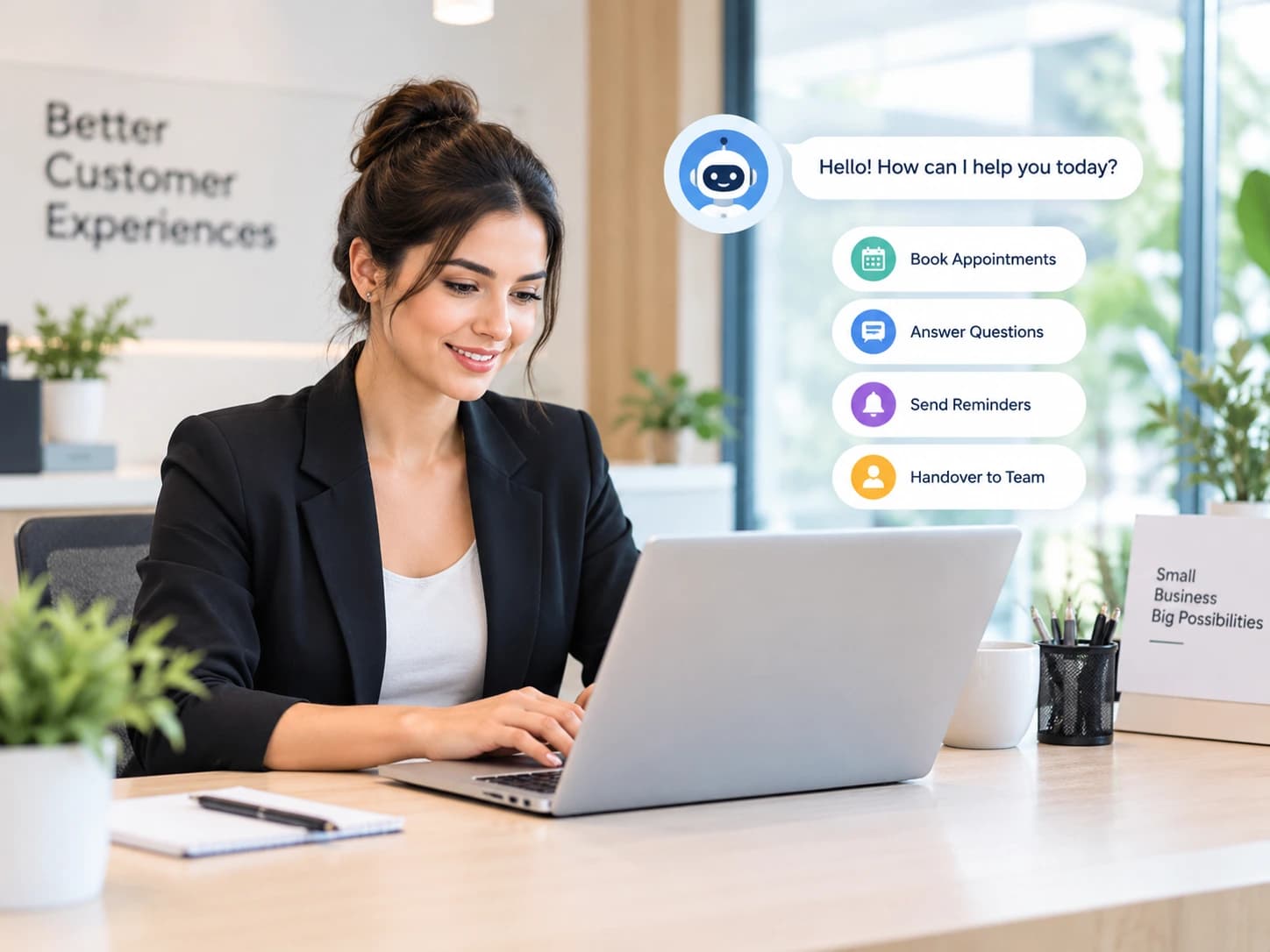
AI receptionist software helps small businesses manage customer enquiries and appointment workflows.
AI Receptionist for Small Business: What to Look For
A small business does not always have someone available to answer every customer enquiry. A salon owner may be serving a client, a clinic receptionist may be checking in a patient, or a consultant may be in a meeting when a new booking request arrives.
An AI receptionist can help manage these routine interactions by answering common questions, collecting information, and supporting appointment scheduling. The right solution depends on how customers contact your business, which tasks you want to automate, and when a human team member needs to step in.
What Is an AI Receptionist for a Small Business?
An AI receptionist is software that uses artificial intelligence to manage routine front-desk interactions. Depending on the platform, it may communicate through telephone calls, website chat, or messaging channels such as WhatsApp.
Its responsibilities can include answering frequently asked questions, collecting customer details, helping customers request appointments, sending reminders, and directing more complicated enquiries to a person.
Not every AI receptionist offers all these capabilities. Some focus on voice calls, while others handle messaging and appointment workflows. Businesses should check the supported channels and integrations before choosing a solution.
How Can an AI Receptionist Help a Small Business?
Respond to routine enquiries
Customers often ask the same questions about opening hours, services, appointment availability, and booking procedures. An AI receptionist can handle approved, frequently asked questions without requiring staff to type the same answers repeatedly.
For example, a salon could use an automated messaging assistant to explain its services and guide customers towards the appropriate booking process.
Support appointment booking
Appointment-based businesses can use AI-powered workflows to collect booking details and help customers schedule, confirm, or reschedule appointments, provided the software supports those actions and has access to the required scheduling system.
This can make the booking process more convenient while reducing repetitive administrative work.
Follow up with customers
Depending on the platform, automated reminders and follow-up messages can help businesses communicate appointment details and reduce the need for manual follow-ups. Message timing, customer consent, and applicable communication rules should be considered when configuring these workflows.
Keep customer conversations organised
When several employees handle enquiries, a shared inbox can help the team see conversations and decide who should respond. Human handover is particularly useful when a customer has a complicated request or needs assistance beyond the AI's approved information.
What Features Should You Look For?
Before selecting AI receptionist software, consider these practical requirements:
Supported communication channels: Does it handle the telephone, website chat, WhatsApp or the channels your customers actually use?
Appointment scheduling: Can it connect to your existing calendar or booking system?
Accurate business information: Can you control the information used to answer questions about services, hours, and policies?
Human handover: Can customers reach a staff member when automation is insufficient?
Reminders and follow-ups: Can you configure useful messages within applicable consent and messaging requirements?
Conversation management: Can authorised team members review enquiries and follow up when necessary?
Pricing and usage limits: Check setup costs, subscription fees, message or call limits, and additional integration charges.
Privacy and security: Understand what customer information is collected, how it is stored, and who can access it.
The best choice is not necessarily the platform with the longest feature list. It is the one that fits your existing workflow and handles your most frequent customer interactions reliably.
AI Receptionist vs. Traditional Receptionist
An AI receptionist can manage repetitive questions and predefined workflows, while a human receptionist can use judgement, empathy, and contextual understanding to handle unusual or sensitive situations.
For many small businesses, the practical approach is to use automation for suitable routine tasks and retain human support for decisions that require personal attention. AI should not be expected to resolve every enquiry independently.
Is ChatSync Solutions Suitable for Your Business?
ChatSync Solutions provides WhatsApp-based customer communication and appointment automation for service businesses. Its medical clinic solution describes patient appointment booking, doctor selection, appointment reminders, and automated answers to common questions.
For a business that receives many enquiries through WhatsApp, this type of workflow may be more relevant than a telephone-only receptionist. However, businesses looking specifically for AI-powered telephone answering should verify voice-call support before making a decision.
You can explore the WhatsApp appointment booking solution for medical clinics to understand the available clinic-focused workflows.
How to Choose the Right AI Receptionist
Start by identifying the problem you want to solve. If customers frequently contact you outside business hours, prioritise suitable after-hours coverage. If staff spend too much time arranging appointments, look for booking and calendar functionality. If enquiries arrive through several channels, consider how conversations will be organised and transferred to your team.
Next, check the total cost, integration requirements, privacy practices, and limitations. Test the system using realistic customer questions before relying on it in everyday operations.
An AI receptionist can be a useful addition to a small business, but its value depends on how well it fits the way your customers communicate. Choose a system that solves a real operational problem rather than paying for features your team will not use.
Explore ChatSync Solutions to learn more about its WhatsApp-based customer communication and appointment automation capabilities.
Frequently Asked Questions
What is an AI receptionist for a small business?
It is software that helps handle routine customer enquiries and, depending on its capabilities, appointment scheduling, reminders, and message routing.
Can an AI receptionist book appointments automatically?
Yes, if the software supports booking actions and is connected to the required calendar or booking system. Available functionality varies by provider.
Is an AI receptionist the same as an AI chatbot?
Not always. An AI chatbot usually focuses on conversations through a digital interface, while an AI receptionist may also manage front-desk tasks such as appointment requests, customer details, and call routing.
Does every AI receptionist answer phone calls?
No. Some products specialise in voice calls, while others work through WhatsApp, website chat or other messaging channels. Confirm supported channels before choosing a provider.
How much does an AI receptionist cost?
Pricing varies according to the provider, communication channels, usage limits, integrations, and setup requirements. Compare the total cost rather than the advertised subscription alone.
#AI Chatbots#AI Receptionist#AI Agents#Appointment Booking#WhatsApp Automation#Small Business Automation#Customer Service Automation