
How WhatsApp Appointment Booking Helps Dental Clinics
ChatSync SolutionsOctober 1, 20269 min read
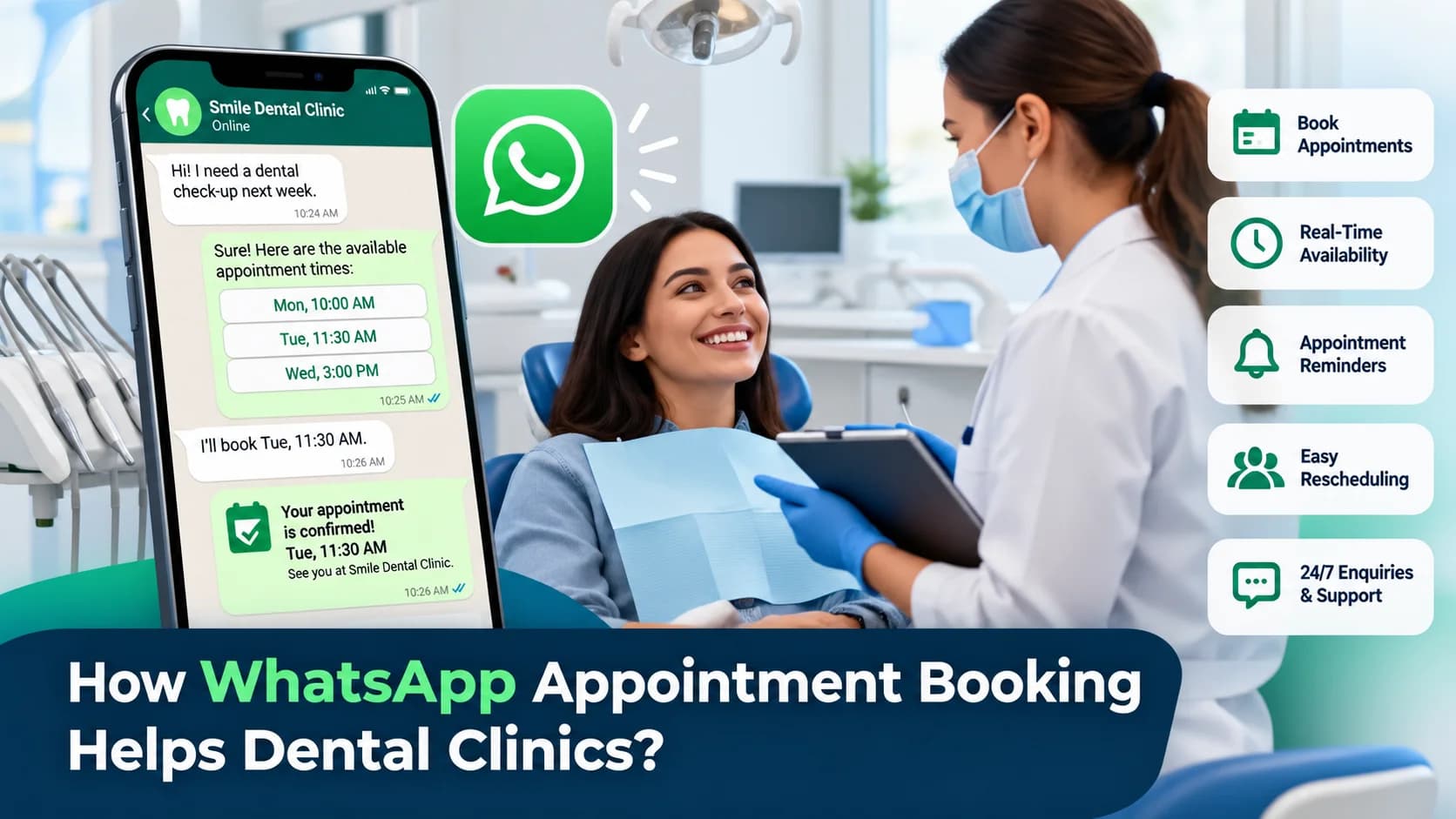
WhatsApp appointment booking helps dental clinics manage appointments, reminders, rescheduling, and patient enquiries.
How WhatsApp Appointment Booking Helps Dental Clinics?
Dental clinics receive appointment requests throughout the day. Some patients call reception, while others use the clinic website, email, or WhatsApp. When all of these conversations are handled manually, simple tasks such as answering questions, booking appointments, and following up with patients can take a significant amount of staff time.
WhatsApp appointment booking gives dental clinics another way to manage these conversations. Patients can use a messaging platform they already know to ask about appointments, check available times, confirm a booking, or request a change.
When WhatsApp is connected to an appointment booking system, it can become part of the clinic's wider reception process. It can help with routine enquiries, appointment scheduling, reminders, follow-ups, and rescheduling while allowing staff to take over when a patient needs personal assistance.
What Is WhatsApp Appointment Booking for Dental Clinics?
WhatsApp appointment booking allows patients to contact a dental clinic through WhatsApp and arrange an appointment through a conversation.
For example, a patient might send a message saying, "I need a dental check-up next week." Depending on the system, the patient can provide basic information, view available appointment times, select a suitable slot, and receive a confirmation.
For dental practices, this can provide an alternative to traditional phone-based booking and reduce some of the repetitive work handled by reception staff.
How Does WhatsApp Help Dental Clinics Manage Appointments?
The main benefit is convenience. Patients can contact the clinic through a familiar messaging platform rather than waiting for someone to answer the phone.
A patient may want to book an appointment after work, ask a question about a service, or change an existing appointment. An automated WhatsApp system can handle routine requests and guide the patient through the next step.
At the same time, not every conversation needs to be automated. When a request is more complicated or requires staff attention, the conversation can be passed to a member of the dental team.
WhatsApp Appointment Booking Features for Dental Clinics
The exact features depend on the software a clinic uses, but a well-connected WhatsApp booking system can support several parts of the appointment process:
Feature | How It Helps a Dental Clinic |
|---|---|
Appointment booking | Patients can request and book available appointments through WhatsApp. |
Real-time availability | Patients can be shown suitable appointment slots when the system is connected to the clinic calendar. |
Booking confirmations | Patients can receive confirmation after selecting an appointment. |
Appointment reminders | Automated messages can remind patients about upcoming visits. |
Rescheduling | Patients can request another available appointment time without calling reception. |
Lead capture | New patient enquiries can be collected and followed up by the clinic. |
Missed-call follow-up | Patients who could not reach reception can be invited to continue the conversation through WhatsApp. |
Shared team inbox | Multiple members of the dental team can manage conversations from one place. |
Human handover | Staff can take over when a conversation requires personal attention. |
After-hours responses | Routine enquiries can receive a response even when reception is closed. |
These features can be particularly useful for practices that receive a high volume of calls and messages throughout the day.
Patients Can Book Appointments More Easily
Making an appointment should be straightforward:
With WhatsApp booking, patients can start a conversation with the clinic instead of searching for a phone number, waiting on hold, or filling out a lengthy form.
If the system is connected to the clinic's appointment calendar, it can show available times and allow the patient to select a suitable appointment.
This gives patients another way to book and can make the process more convenient for people who prefer messaging to phone calls.
Dental Clinics Can Handle After-Hours Enquiries
Patients do not always contact dental clinics during reception hours:
Someone may remember that they need a check-up in the evening or want to ask about an appointment over the weekend. If the clinic only responds during working hours, the patient may have to wait until the next day.
A WhatsApp system can respond to routine enquiries outside normal reception hours. It can provide information, collect the patient's request, and help start the booking process.
When the request requires a member of staff, the conversation can be handled by the dental team when they become available.
Automated Reminders Can Help Reduce Forgotten Appointments
Patients can forget appointments, particularly when they were booked several weeks in advance:
WhatsApp reminders give clinics a simple way to contact patients before their scheduled visit. Depending on the system, the patient can confirm the appointment or request a different time.
For the clinic, this can make it easier to identify changes before the appointment date and potentially reduce empty appointment slots caused by forgotten visits.
Patients Can Reschedule Without Calling
Plans change, and patients sometimes need to move an appointment:
With a WhatsApp booking system that supports rescheduling, patients can request a new appointment through the same conversation.
If the system has access to the clinic's appointment availability, it can provide alternative times instead of requiring reception staff to search through the calendar manually.
For busy dental practices, this can remove one more repetitive task from the reception workflow.
WhatsApp Can Help Capture New Patient Enquiries
Not every person who contacts a dental clinic is ready to book immediately:
A potential patient may first ask about check-ups, cleaning appointments, treatments, prices, or availability. If these enquiries are handled manually, some can be forgotten during busy periods.
WhatsApp can give the clinic a central place to manage these conversations. Basic information can be collected from the patient, while staff can follow up when a personal response is needed.
This is especially useful for practices that want to keep track of enquiries instead of relying entirely on phone calls and handwritten notes.
It Can Support Missed-Call Follow-Up
Reception staff can miss calls when they are helping patients, dealing with another caller, or handling other tasks around the clinic:
A missed-call follow-up process gives the clinic another way to reconnect with the person.
Instead of leaving the caller without a response, the clinic can invite them to continue the conversation through WhatsApp. From there, the patient can ask a question, provide their details, or begin the appointment booking process.
This can help dental practices stay in contact with potential patients who were unable to reach reception by phone.
AI Can Handle Routine Reception Tasks
AI can help with repetitive administrative conversations that would otherwise take up reception staff's time:
For example, an AI receptionist can answer common questions about clinic services, opening hours, appointment availability, and other information provided by the practice. When connected to the booking system, it can also assist with appointment requests, confirmations, reminders, and rescheduling.
A dental AI receptionist can also help identify conversations that require staff attention. For example, the system may collect information from a patient reporting significant pain and notify the dental team so that the situation can be handled appropriately.
However, AI should not replace professional dental judgement. It should not diagnose a patient's condition or recommend treatment. Clinical questions and situations requiring professional assessment should be passed to an appropriate member of the dental team.
Why Human Handover Still Matters?
Automation works best when patients can still reach a real person when necessary:
Some patients may have questions that cannot be answered through a standard booking workflow. Others may simply prefer to speak with someone from the clinic.
A good WhatsApp appointment system should allow staff to take over the conversation without starting from the beginning. Having access to previous messages can also prevent patients from having to repeat information they have already provided.
This creates a balance between automated communication and personal service.
How WhatsApp Fits Into a Dental Clinic's Reception Workflow?
WhatsApp appointment booking does not have to operate separately from the clinic's existing processes.
A typical workflow might look like this:
Patient enquiry → WhatsApp conversation → Information or FAQ response → Appointment availability → Booking → Confirmation → Reminder → Rescheduling or follow-up if needed → Human handover when required
This type of workflow allows routine conversations to be handled automatically while keeping staff involved where their input is needed.
For a clinic, the benefit is not simply having another messaging channel. The goal is to connect patient communication with the actual appointment and follow-up process.
What Should Dental Clinics Look for in WhatsApp Booking Software?
Dental practices should look beyond basic WhatsApp messaging when comparing booking systems:
Useful features can include real-time appointment availability, booking confirmations, automated reminders, rescheduling, lead capture, missed-call follow-up, a shared team inbox, website chat, reporting, integrations, and human handover.
Clinics should also consider how the system handles conversations that require staff attention and whether it can fit into the practice's existing booking process.
For dental practices looking to combine WhatsApp communication with appointment booking and patient follow-up, ChatSync's dental appointment solution is one option to consider. The platform is designed around dental appointment conversations, automated booking, reminders, rescheduling, lead capture, missed-call follow-up, and staff handover.
Frequently Asked Questions
Can patients book dental appointments through WhatsApp?
Yes. A WhatsApp booking system can allow patients to start a conversation, provide their details, view available appointment times when supported, and confirm a suitable appointment.
Can WhatsApp send dental appointment reminders?
Yes. WhatsApp can be used to send automated appointment reminders. Depending on the system, patients may also be able to confirm their appointment or request a different time.
Can patients reschedule dental appointments through WhatsApp?
Yes. If the booking system supports rescheduling and is connected to appointment availability, patients can request and select another suitable time through WhatsApp.
Can WhatsApp appointment booking work after clinic hours?
Yes. Automated WhatsApp systems can respond to routine enquiries outside normal reception hours and collect requests for staff to handle when necessary.
Can dental staff take over a WhatsApp conversation?
Yes. A system with human handover can allow staff to take over conversations when a patient needs personal assistance or the request falls outside the automated workflow.
Can WhatsApp help dental clinics follow up with new patients?
Yes. WhatsApp can be used to capture new patient enquiries and support follow-up conversations, helping clinics keep track of people who have shown interest but have not yet booked an appointment.
Final Thoughts
WhatsApp appointment booking can give dental clinics a more convenient way to manage patient communication while reducing some of the repetitive work handled by reception teams.
Patients can use WhatsApp to ask questions, request appointments, receive reminders, and make changes without relying entirely on phone calls.
The most useful setup is more than an automated WhatsApp account. It connects patient conversations with the clinic's actual appointment process and gives staff an easy way to step in when personal assistance is needed.
For dental clinics considering WhatsApp appointment booking, the best starting point is to look at how patients currently contact the practice. Missed calls, repetitive questions, appointment changes, after-hours enquiries, and follow-up gaps can all show where WhatsApp automation may be useful.
When these areas are connected through one workflow, WhatsApp can become a practical part of a dental clinic's wider patient communication and appointment management strategy.
#whatsapp appointment booking#dental appointment booking#whatsapp for dental clinics#dental clinic automation#dental appointment software